

2026
How Cleaning and Rinsing Instruments Helps Prevent Autoclave Valve and Sensor Failures
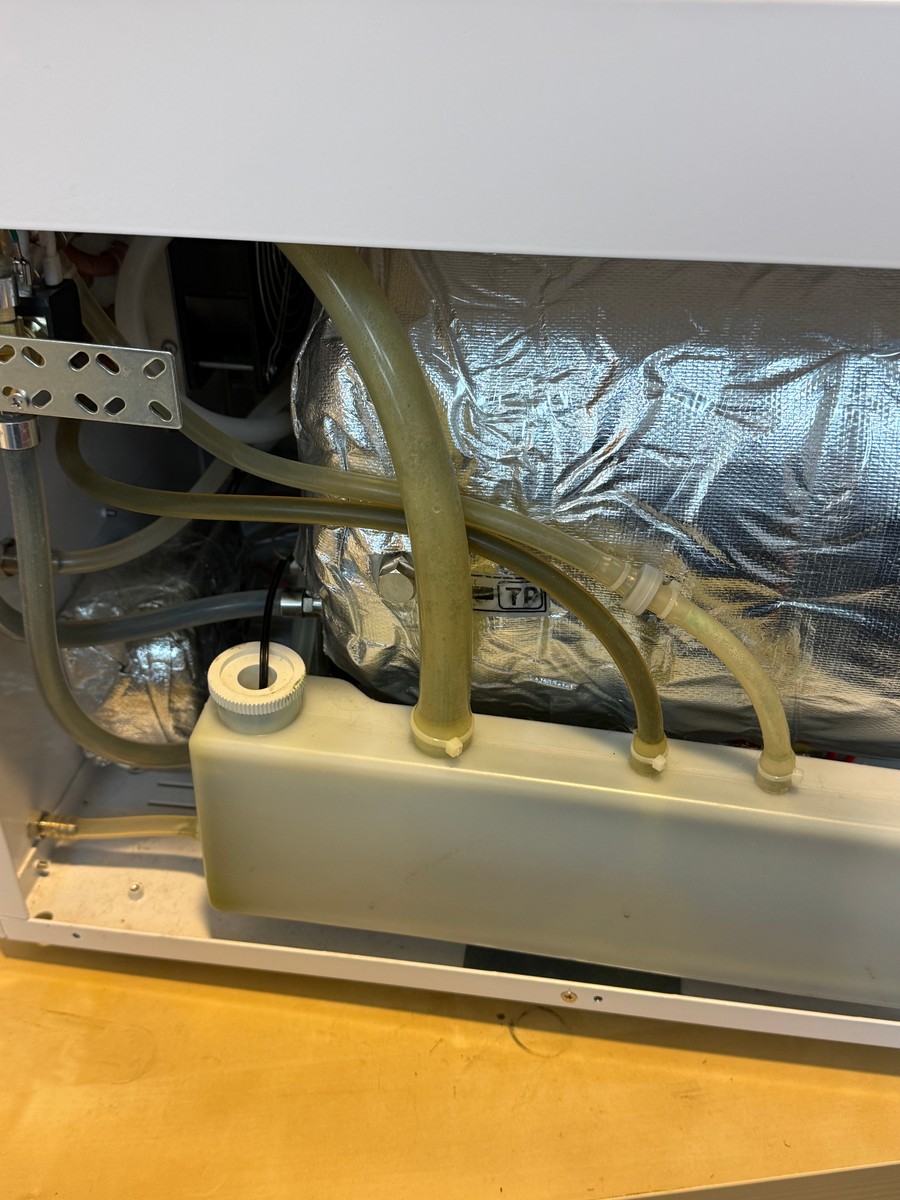
When we open an autoclave in the shop or on a service call, a stuck solenoid, a lazy drain, or a false water-level error often traces back to the same place: what went into the chamber on the instruments.
Sterilizing does not clean. If instruments go in with residual soil, detergent, saline, blood, or hard-water minerals, that material does not stay on the load. Steam and condensate carry it onto the chamber walls, down the drain line and, on many tabletop units, back into the water reservoir. From there it works into the small passages that actually run the machine — the valves, sensors and orifices.
How residue gets into the chamber, drain and reservoir
A typical tabletop autoclave reuses water from the reservoir to make steam, then condenses that steam and returns it. Anything dissolved or suspended in the chamber water has a path back into the reservoir and through the valves that fill, exhaust and drain the machine.
The contaminants we see most often start at the sink, not inside the sterilizer:
- Debris and residual soil left in hinges, lumens, serrations or cassette corners. Particles travel with condensate and settle in drain screens, valve seats and orifices.
- Detergent residue when instruments are washed but not rinsed thoroughly. Foam and film dry on surfaces, then wash into the water path on the next cycle.
- Saline or blood left on instruments or trays. Salts and protein cook onto metal, discolor tubing and leave a film that clogs small ports.
- Hard-water minerals from a tap-water rinse, or from topping up the reservoir with anything other than the water the manufacturer specifies. Scale builds on heating surfaces, level probes and the tiny openings in valves.
Follow the manufacturer's instructions for use (IFU) for the detergent, the rinse, and the water quality your autoclave is designed to use. The steps below are the habits that keep that water path clean; they do not replace the IFU.
What that residue does to valves and sensors
Once debris, film or minerals are in the water path, they collect in the parts with the smallest openings and the tightest tolerances:
- Solenoid valves can stick open or closed when deposits form on the seat or around the plunger. The machine may fail to fill, fail to exhaust, or run a long, incomplete cycle.
- Check valves may not seal, so water or steam moves in the wrong direction and the reservoir or drain behaves unpredictably.
- Water-level sensors (probes or floats) pick up scale and film. The control board then gets a false reading — “low water†when the reservoir is fine, or the opposite — and the cycle aborts or never starts.
- Temperature sensors that are coated or insulated by deposits can lag or read low, which shows up as longer cycles or temperature alarms.
- Small orifices in valve ports, drain fittings and fill lines restrict flow. That is a common cause of a slow drain and of a load that comes out wet.

None of this is a mystery once you have the cover off. The water path tells the story.

What to do before every load
The aim is simple: instruments should go into the autoclave clean, thoroughly rinsed, and dry, then loaded the way the manufacturer specifies. That keeps soil out of the steam and out of the valves.
1. Clean first — sterilizing is not a washer
Gross soil comes off at the sink or in an ultrasonic, not in the chamber. Follow the instrument and detergent IFUs for manual cleaning or ultrasonic cleaning, including dilution and contact time. Open hinges, brush serrations and flush lumens so debris is not sitting in a joint waiting for the first pulse of steam to wash it out.
2. Rinse thoroughly, with a distilled or RO final rinse
Rinse until the detergent is actually gone, not just until the foam looks lighter. A leftover film is enough to carry into the reservoir. For the final rinse, use distilled or reverse-osmosis (RO) water unless the manufacturer's IFU specifies something different. Tap water leaves minerals behind; those minerals become scale in the chamber, drain and reservoir. The same rule applies when you fill or top up the autoclave itself: use the water quality called for in the IFU, which for most machines is distilled or RO.
3. Dry the instruments completely
Water left in a hinge, a lumen or a cassette carries dissolved soil and minerals into the chamber. Shake out, air-dry or use lint-free drying as your process requires, and do not load instruments that are still wet from the rinse.
4. Load correctly — do not overload
A packed chamber traps condensate and keeps soil and wetness in the load instead of letting steam circulate and the drain do its job. Place pouches and cassettes as the manufacturer's IFU shows — typically on edge, not stacked flat in a pile, and not pressed against the chamber wall or the door. Leave space between packs. If you are unsure, the IFU for your model is the authority, not a habit copied from another machine.
For a closer look at loading, see how to properly load an autoclave. Water quality is covered in more detail in Does water quality matter for autoclave performance and longevity?
Warning signs the water path is already fouled
You do not have to wait for a no-start or a failed cycle. These are the signs we tell clinic staff to watch for between service visits:
- Discolored or yellowed tubing, especially lines in or around the reservoir.
- Cloudy, discolored or foul-smelling reservoir water, or a visible film on the reservoir walls.
- A slow drain at the end of the cycle, or water left standing in the chamber.
- Water-level errors or repeated low-water alarms when the reservoir looks adequately filled.
- Cycles that run longer than usual, or that abort with temperature or pressure alarms.
- Wet loads or damp pouches after a cycle that used to dry cleanly.
If you are seeing any of these, stop topping the reservoir with whatever is handy and book a service visit. A technician can flush the water path, clean or replace fouled valves and sensors, and check that the machine is cycling the way it should. Continuing to run a restricted drain or a sticky valve usually makes the next failure more expensive, not less.
A note on Class S machines
Every autoclave benefits from clean, well-rinsed, dry instruments. That said, not every machine has the same number of parts in the steam and water path. In our experience, Class S sterilizers are mechanically simpler, with fewer valves and sensors that can foul and fail. A Flight Clave is one example of that simpler Class S design. The cleaning and rinse steps still matter; there is just less in the machine for leftover soil and minerals to lodge in.
Frequently asked questions
Why can poorly rinsed instruments damage autoclave valves and sensors?
Steam and condensate carry residual detergent, blood, saline, debris and minerals off the load and into the chamber, drain line and reservoir. Those materials then deposit on solenoid valves, check valves, level and temperature sensors, and small orifices, which leads to sticking valves, false level readings, slow drains and longer or failed cycles.
What water should we use for the final rinse?
Use distilled or RO water for the final rinse unless your manufacturer's IFU says otherwise, and use the water quality specified in the IFU when you fill the autoclave reservoir. Tap water leaves mineral scale in the very passages that valves and sensors rely on.
What warning signs mean the water path may already be fouled?
Watch for yellowed or discolored tubing, cloudy or discolored reservoir water, a slow drain, water-level errors, cycles that take longer than usual, and wet loads. Those are reasons to book a service visit rather than keep running the machine as is.
If we clean and rinse carefully, do we still need preventive maintenance?
Yes. Good instrument preparation keeps a lot of avoidable soil out of the valves, but it does not replace scheduled maintenance and calibration. A routine visit supports inspection readiness and lets a technician catch wear, fouling and sensor drift before they stop a clinic day.
Book preventive maintenance in BC, Alberta or Saskatchewan
Alpha Scientific Repair Services Ltd. has been servicing sterilizers for 25+ years. Our factory-trained technicians provide mobile, on-site autoclave repair, preventive maintenance and calibration to clinics, labs and hospitals across British Columbia, Alberta and Saskatchewan.
If your tubing is already discolored, your reservoir water looks off, or you just want the machine checked before the next busy stretch, we will come to you. A regular maintenance and calibration visit supports inspection readiness; it is not a certification or compliance guarantee, and we work to the manufacturer's specifications for your model.
See our autoclave maintenance and calibration service, or book a visit in British Columbia, Calgary, Edmonton or Saskatchewan. You can also use our contact form.
Call 1-888-818-4847 (toll-free) or 604-690-3389.
